

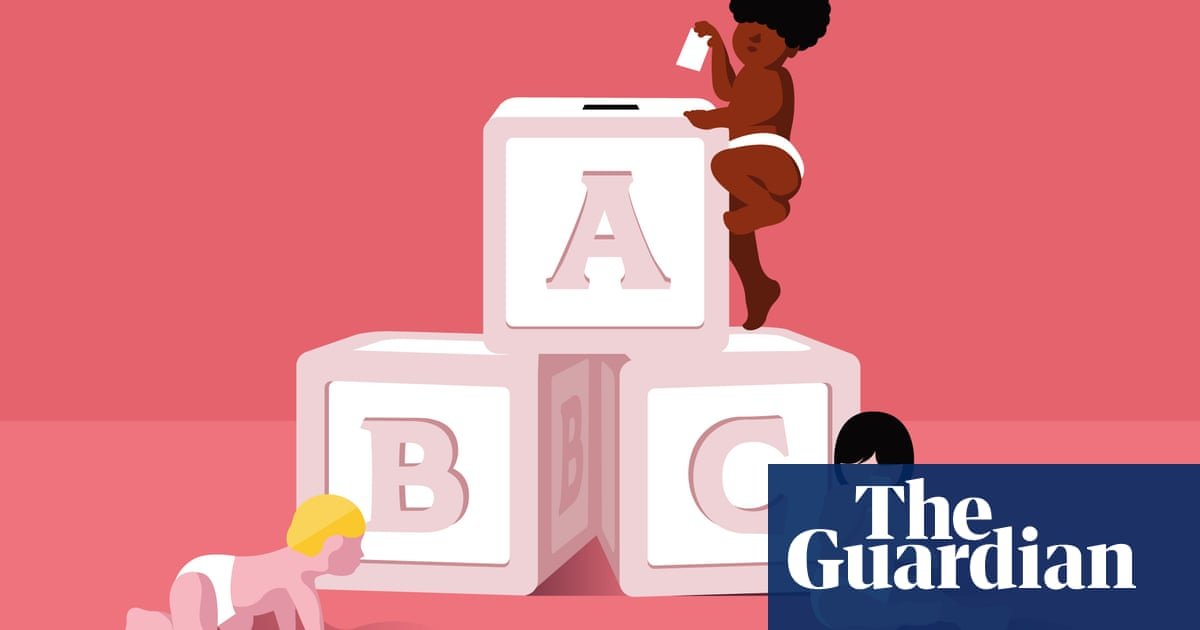
Two years ago, Alisa Perales sued California and the US government because they wouldn’t let her vote. The academically gifted Perales, who was eight years old at the time, argued that the rule excluding under-18s from democracy, which is enshrined in the US constitution, amounted to age discrimination.
Her case was thrown out, but it wasn’t the first time the voting age was challenged and it won’t be the last. The issue of whether the limit should be removed entirely has been raised periodically since at least the 19th century, and the ageless voting movement has been gaining momentum since political philosopher John Wall wrote a manifesto for it in 2021. More recently, children’s author and education researcher Clémentine Beauvais published a short tract in her native France making the case for it.
Both Wall and Beauvais report that a common first reaction to the concept of ageless voting is laughter. Then people start to think, and often they end up saying that they can’t find any serious objections.
Wall first confronted the question 20 years ago, when he took on a PhD student who had been researching children’s parliaments in India. He soon came round to the idea that it was unjust that up to a third of the population was excluded from the democratic process, since political decisions affected them, too. As he became better informed, he realised that excluding the young was bad for society as a whole.
Beauvais agrees. In her tract she highlights evidence that larger electorates produce better decisions. Younger people’s gaze is fixed further in the future than that of older people, for obvious reasons, but older people have more experience, so they complement each other when it comes to prioritising societal issues. And children are observant and can ask questions that are troubling because they are so fundamental: questions about war, meat, money, love and death, for instance. When Greta Thunberg started campaigning for urgent climate action at the age of 15, Beauvais writes, many adults criticised her, but her position is now mainstream.
Children can also be silly and naive, of course. But if silliness and naivety were reasons to deprive people of the vote, many adults would come a cropper. In fact, although the human brain takes years to mature, it hasn’t completed that process by 16, 18, or even – for some parts of the brain – the early 30s. And however you define competence to vote, you’ll find that it doesn’t start or stop cleanly at any age.
This line of thought led Wall to conclude that the only criterion for eligibility to vote should be wanting to vote. Again, Beauvais agrees. But they disagree on the practical implications of this. Wall assumes that wanting to vote is the default and proposes that someone else should vote for the young person by proxy until they are able to do so themselves – as already happens for certain categories of adult in many countries, including the cognitively impaired. Most often, the proxy voter in the case of a very young person would be a parent.
Beauvais considers proxies risky – what if a five-year-old changed her mind and her parents refused? – and also difficult to implement, for example in the case of divorced parents. She would rather societies accepted that, though a person would have the right to vote from birth, it would be some time before they exercised it. In that time – the length of which would depend on the individual – the right would be purely symbolic. It would still mean something, just as it means something that everyone in the UK has the right to marry a person of the same sex even if many of them will never exercise it.
A common objection to ageless voting is that individuals who can’t be trusted to drink, drive or have sex shouldn’t be trusted to vote. But Harry Pearse, research director at the Centre for Deliberation, part of the UK’s National Centre for Social Research in London, says that’s a red herring. We don’t allow the very young to indulge in those behaviours because we want to protect them from the potentially harmful consequences, but voting isn’t harmful to the voter. It’s not as if we’re asking babies to make policy. They may vote badly, whatever that means, but again, so do many adults.
Some countries, including Scotland, already allow 16-year-olds to vote, so data exists on 16-year-olds’ voting habits. Five-year-olds are an unknown quantity, on the other hand, and Pearse thinks that’s a good thing: “Some healthy chaos gets chucked into the system.” For him, the beauty of democracy – for all its flaws – is its simplicity. When the rule is one-person-one-vote, politicians feel pressure to serve all constituencies.
In practice, Beauvais says, because we know so little about how the very young would vote, the voting age would probably have to be lowered incrementally. That way society could address any vulnerabilities the new regime exposed – the risk of a charismatic teacher capturing large numbers of young votes for a given political cause, say – before advancing to the next stage. The goal would still be to abolish the age threshold completely.
Many people feel that modern democracies have become calcified. In the past, when that happened, societies sought to expand the franchise, and in time, Pearse says, the expansion reinvigorated democratic life. At this point in history, the only way we can expand, short of violating the species barrier, is downwards in age. Beauvais sees that as much more than a political project. It invites us to stop thinking about participation in terms of competence or productivity, she says, and to focus more on our lived experience and interdependence. It’s about what it means to be an individual in society. In her view, we should all want Alisa Perales to vote – and not just for her sake.
after newsletter promotion
Further reading
Suffrage for Children by Mike Weimann (Common Threads, £18)
A Minor Revolution by Adam Benforado (Crown Forum, £24)
Give Children the Vote by John Wall, (Bloomsbury, £18.99)