

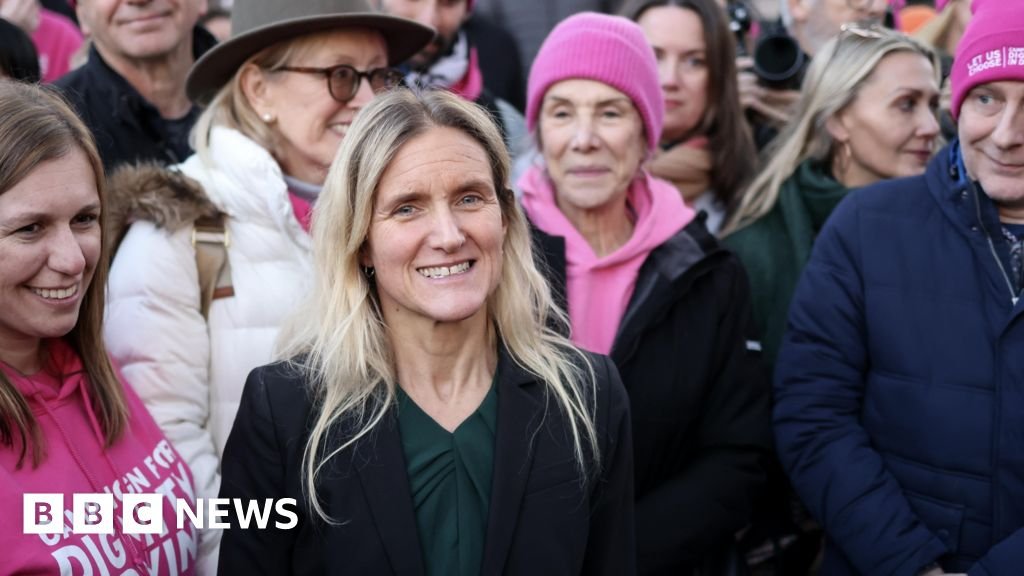
Opposition to a bill which would legalise assisted dying in England and Wales is growing among MPs, the BBC has found.
The Assisted Dying Bill was supported by 330 MPs last year, passing its first major vote in the House of Commons with a majority of 55 MPs from a wide range of political parties.
But at least a dozen MPs who backed it or abstained in November have now said they are likely to vote against it.
The bill would allow terminally ill adults with less than six months to live to receive medical assistance to die
Supporters remain confident it will eventually become law but it faces further parliamentary tests.
The bill is a private members’ bill, sponsored by backbench Labour MP Kim Leadbeater.
MPs have been given a free vote on it, meaning they can decide based on their conscience rather than having to follow a party line.
They have spent the past few months examining it in detail, with more than 500 amendments tabled.
Some of these changes will be voted on by MPs next Friday – and a final Commons vote will take place in the summer, before it heads to the House of Lords for further scrutiny.
Markus Campbell-Savours, the Labour MP for Penrith and Solway, is one of those who has said he’s now likely to vote against the bill after previously supporting it.
He said he still considers himself “a supporter of assisted dying” but believes the current bill crosses “red lines for protecting the vulnerable”.
“I want to see safeguards that will ensure that assisted dying is not overextended to include those in situations where there are alternative ways to improve the quality of their lives,” said Campbell-Savours.
“I would also be very concerned if legislation produced a situation where people who considered themselves a burden on their families and friends felt pressured to end their life.”
Fellow Labour MP Josh Fenton-Glynn also plans to vote no, having previously abstained.
“If you’d asked me at any point in my life what I thought of assisted dying, I’d have always said in favour,” he told the BBC.
He has suggested a number of amendments to the bill, and claims he is “still open to supporting” the plans, but doubts it will change after Leadbeater blocked previous similar attempts.
“We see quite a few of the amendments which are specifically aimed at stopping coercion being opposed by the supporters of the bill,” he said, adding: “I don’t think chances to make the bill safer have been taken.”
The two MPs have added their names to a growing list of their colleagues who have suggested they will switch sides including: Tory former minister George Freeman, Tory MPs Mike Wood and Andrew Snowden, Lib Dem Brian Matthew, Labour’s Jonathan Hinder, Reform UK chief whip Lee Anderson and ex-Reform MP Rupert Lowe.
Labour MP Debbie Abrahams and Tory MP Charlie Dewhirst, who abstained previously, will vote against.
Labour’s Karl Turner, who voted in favour at second reading, is now abstaining.
Tory MP David Davis has not announced how he plans to cast his next vote, but has publicly backed a number of amendments that would make sweeping changes to the bill.
Some MPs have also changed their stance, by supporting the bill. Minister Chris Bryant is understood to be backing it, having abstained in November. Labour MP Jack Abbott, who voted against last November, is also now likely to vote in favour.
Others who were hesitantly supportive are now more firmly in favour.
Liz Saville Roberts, the leader of Plaid Cymru at Westminster, said she was initially concerned but supported the principle of assisted dying.
“I think the safeguards have got stronger,” she said. “They have been improved through the bill committee and through the evidence that we heard.”
One of the changes made as the bill was scrutinised was allowing Senedd members a vote on whether it will apply in Wales.
Despite opposition, supporters expect the bill to clear the Commons and go on to the House of Lords.
Campaigners backing the bill do not expect many MPs to reverse their views – but with such tight margins, efforts to shore up support are in full swing.
One major threat, for supporters of the bill, is MPs deciding to return home to their constituencies instead of voting.
Due to a quirk of the parliamentary system, private members’ bills are normally debated on Fridays – a day when MPs are normally in their constituencies.
There is also growing concern that the government cannot afford to keep giving it parliamentary time.
One Labour source opposed to the bill told the BBC: “Given the huge amount of difficult issues the government face, from winter fuel payments and Personal Independence Payment to defence and special educational needs and disabilities spending, a tight vote on assisted dying becomes a real problem.
“Lots of MPs think No 10 would be unwise to expend political capital continuing with this very divisive issue rather than choosing to fix the stuff we got elected to sort.”