

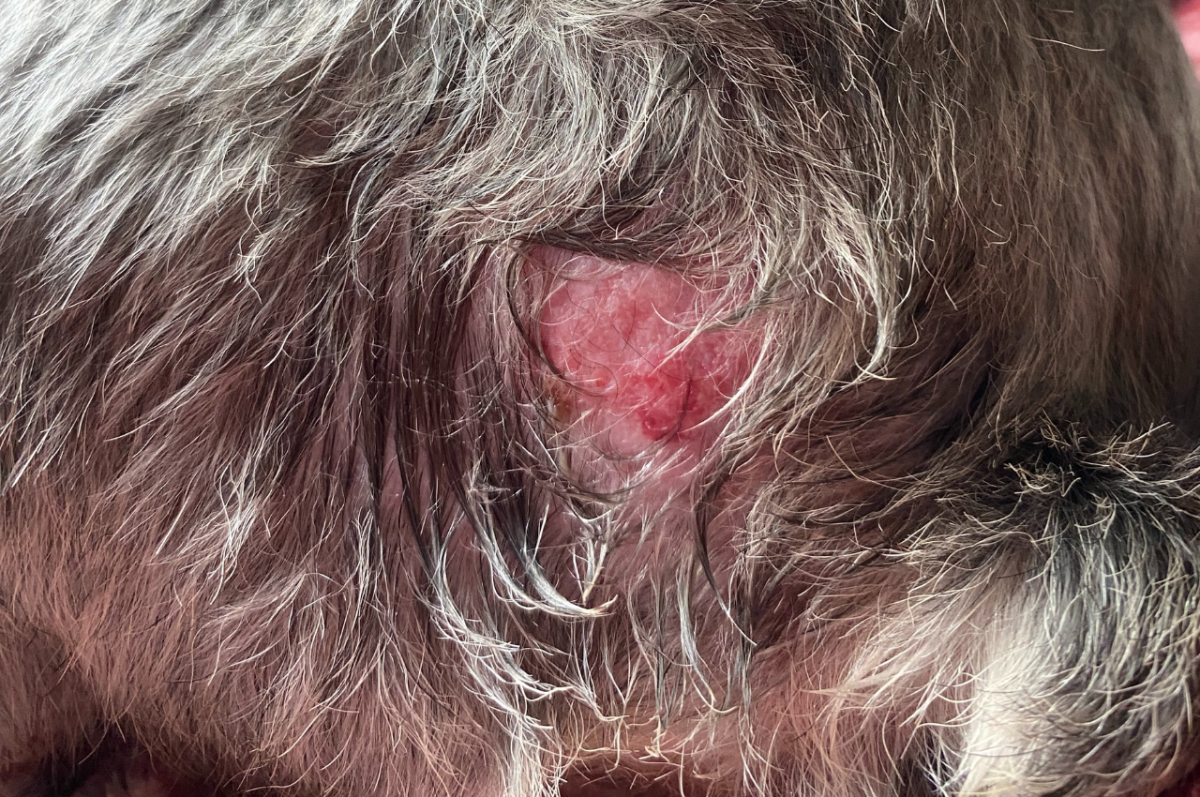
Q: “My Schnauzer is four and had a severe reaction to the rabies vaccine. He acted like he was set on fire, then developed a huge sore. They followed up with two steroid shots. After he had this reaction, I saw this video talking about this very thing, and it can cause cancer to develop.
He is currently taking the yearly injection to prevent heartworms, not the ivermectin monthly med. I was wondering if I can give ivermectin as a preventative since I’m very concerned.”
A: Yes, some dogs are prone to developing a patch of hair loss at the rabies injection site. It’s common in some small breeds, like Bichons, Yorkies and Poodles. It sometimes goes away, but in other dogs, it’s there for life.
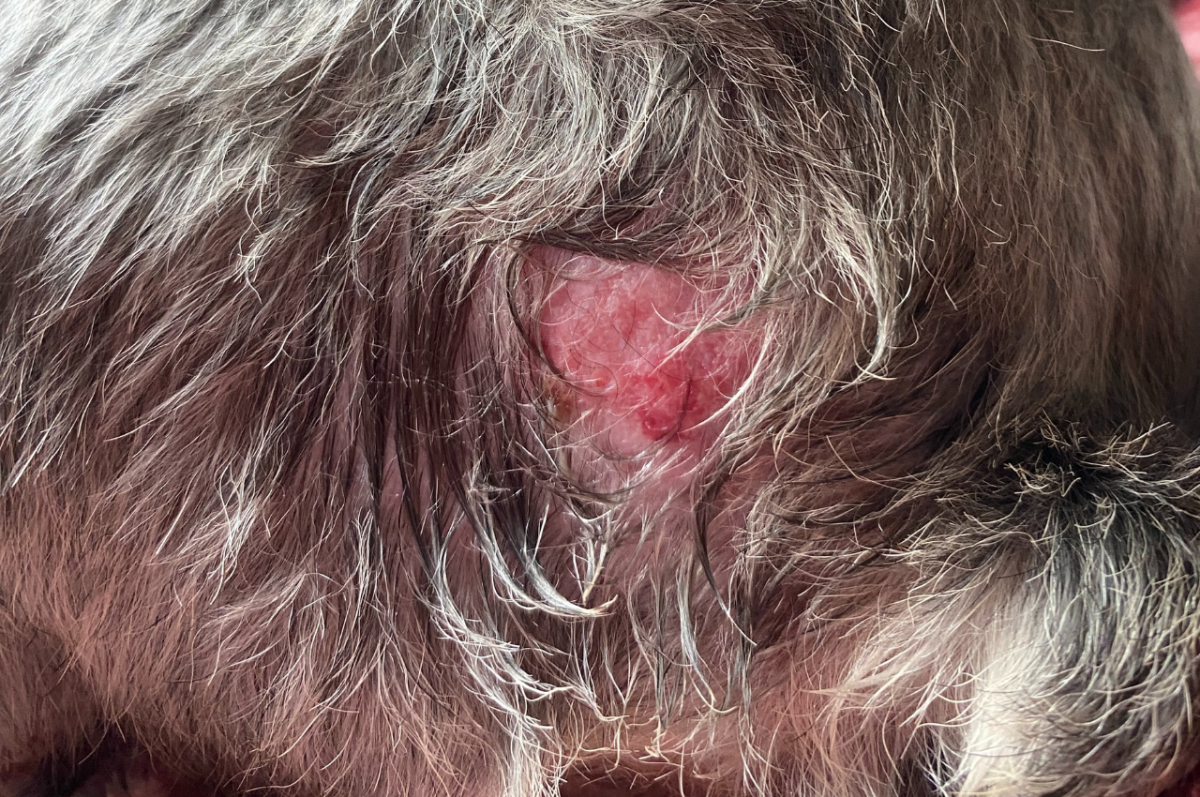
The reaction you described and that first photo you sent look a lot more severe than the regular patch of hair loss we see. Some of those spots do develop red and thickened skin at the injection site, but his looks worse than normal.
Some other dogs can develop a sarcoma at the vaccination site. It’s extremely rare, but something you should keep an eye on. There are no accurate numbers, but it’s probably about 1 in every 10,000 rabies vaccines given.
Related: Will a Rabies Shot Cause My Dog to Have a Seizure?
Preventing Cancer After Vaccination
As far as preventing that vaccinated area from developing into a sarcoma, there isn’t a lot of research on that type of cancer prevention. The most common things suggested, like having your dog spayed and avoiding toxins, are not at all helpful in this situation.
There are only two things I’m aware of that might help:
- The first is the ketogenic diet. As cancer cells are developing, they require an energy source, as they only burn glucose. Please take the time to read this link. This diet was developed to fight cancer that’s already growing, but the concept is the same: Starve the cancer but allow the cells in the body to thrive off of an alternate energy source.
- The second may be cancer-fighting mushrooms and Chinese remedies. Unfortunately, the only research available is for cancer treatment, not prevention, since if a dog doesn’t come down with cancer, that can’t be proof that it’s effective. This is also relatively expensive.
Will Ivermectin Help?
There’s no indication that ivermectin will provide any benefit to your dog. It’s much less expensive, but I would be hesitant to use it as a preventative at the high dose recommended for cancer treatment. There could be negative consequences, but as far as I know, there are no journal reports of this.
Switch to Oral Heartworm Prevention
Since your dog is very reactive when receiving the rabies vaccine, I certainly wouldn’t want to give that heartworm prevention injection again. There’s no way to tell which component of the rabies vaccine caused so much pain in your dog, and one of the inactive ingredients in the heartworm medication may cause the same thing.
I don’t know if he’ll react to it, but I wouldn’t want to take the chance since there are so many effective oral medications available. It isn’t too much trouble to switch him to oral when the injection stops working.
Try to Have Future Rabies Vaccines Waived
I also wouldn’t want him to have the rabies vaccine again. Unfortunately, most states have laws that require dogs to be vaccinated every three years or so to prevent rabies. That means if you’re going to keep your dog registered where you live, he will need to be vaccinated again.
The veterinarian who saw his reaction to the vaccine may be able to give you a waiver so that you can have him licensed when his current license expires.
None of the other vaccines are legally required.
If You Notice Any Changes, See the Vet
If you do notice any change in his old vaccine site, especially if the hairless area seems to be growing, get him to your regular vet as soon as possible. Vaccine-associated sarcomas can be aggressive, and sometimes the entire leg will need to be amputated. If caught early, they may be able to remove just the tumor.
Up Next:
Related: The Truth About Dog Vaccinations
Sources
- Vitale, Gross, Magro. Vaccine-induced ischemic dermatopathy in the dog. Vet Dermatol. 1999 Jun;10(2):131-142. doi: 10.1046/j.1365-3164.1999.00131.x. PMID: 34644929. https://pubmed.ncbi.nlm.nih.gov/34644929/
- Jacobs TM, Poehlmann CE, Kiupel M. Injection-Site Sarcoma in a Dog: Clinical and Pathological Findings. Case Rep Vet Med. 2017 May 9;2017:6952634. doi: 10.1155/2017/6952634. PMID: 29955431; PMCID: PMC6005287. https://pmc.ncbi.nlm.nih.gov/articles/PMC6005287/