

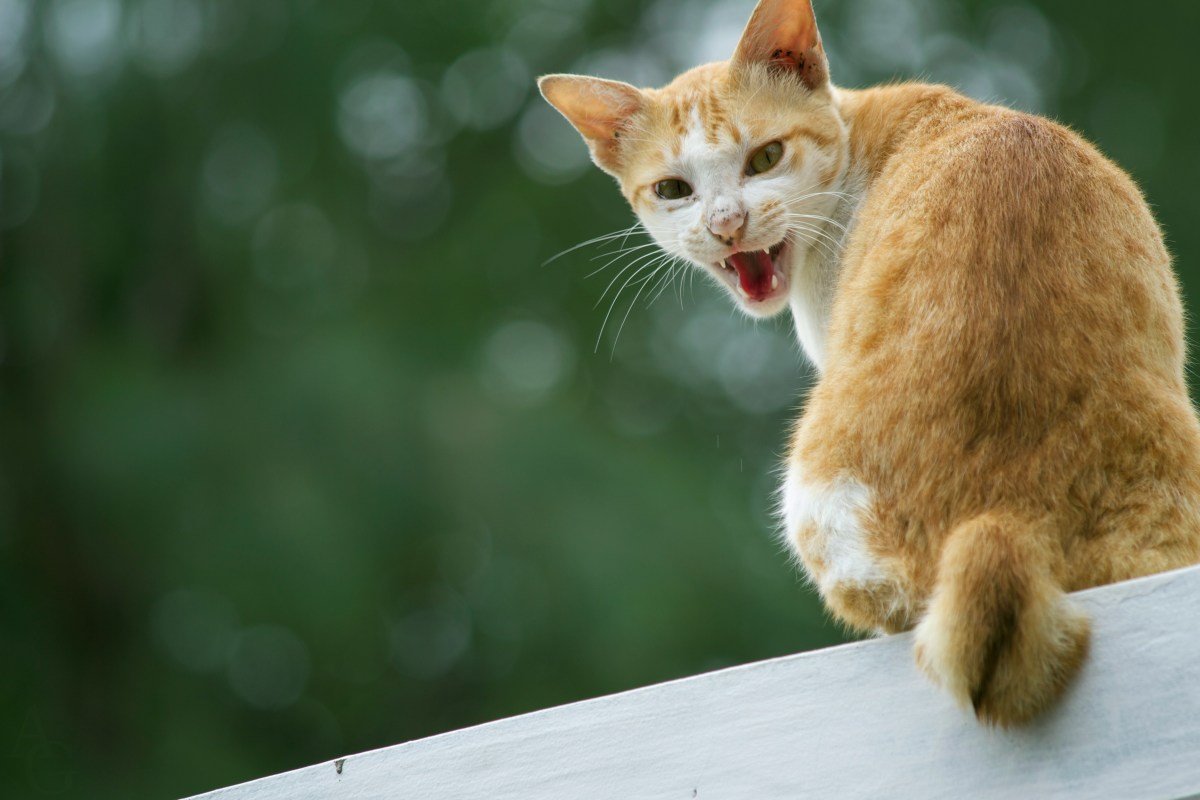
As cat parents, we often assume that cats have it all when it comes to living the ultimate luxury lifestyle. After all, they get to spend 16 hours a day snoozing in sunbeams. Their meals are delivered like clockwork. They don’t need to commute, nor must they take standardized tests. They don’t pay rent and don’t need to sit through corporate PowerPoint presentations.
With all of this in mind, it’s easy to ask, what could possibly stress out a cat? They seem to live exemplary lives with their innate minimalist wisdom!
But if we look closer, we may realize that behind a chill exterior hides a highly sensitive and reactive nervous system.
This makes cats prone to experiencing stress acutely, but because they can’t express it with words, their stress symptoms often go unrecognized, even by the most attentive cat parents.
Related: Why Do Cats Hide When They’re Sick? A Vet Advises What to Do
What Causes Stress in Cats?
To fully understand what causes feline stress, we need to speak cats’ language—and no, I don’t mean “meow.” I mean that we need to take a closer look at their behavioral and evolutionary history.
From a feline standpoint, their territory is the axis around which everything revolves. Cats are wired to depend on their familiar territory for survival. Therefore, the couch, the chair and that specific pillow by the window aren’t considered just objects. To a cat, these items feel like a safety net.
Any little change, whether in their environment or routine, even the slightest one, can feel unsettling and disorienting to a cat.
Cats are almost like control freaks (I say that with respect), so even little things that we may consider innocent or “positive,” such as upgrading their food, buying a fancy new bed or even switching the brand of litter, can leave cats feeling unsafe and out of control.
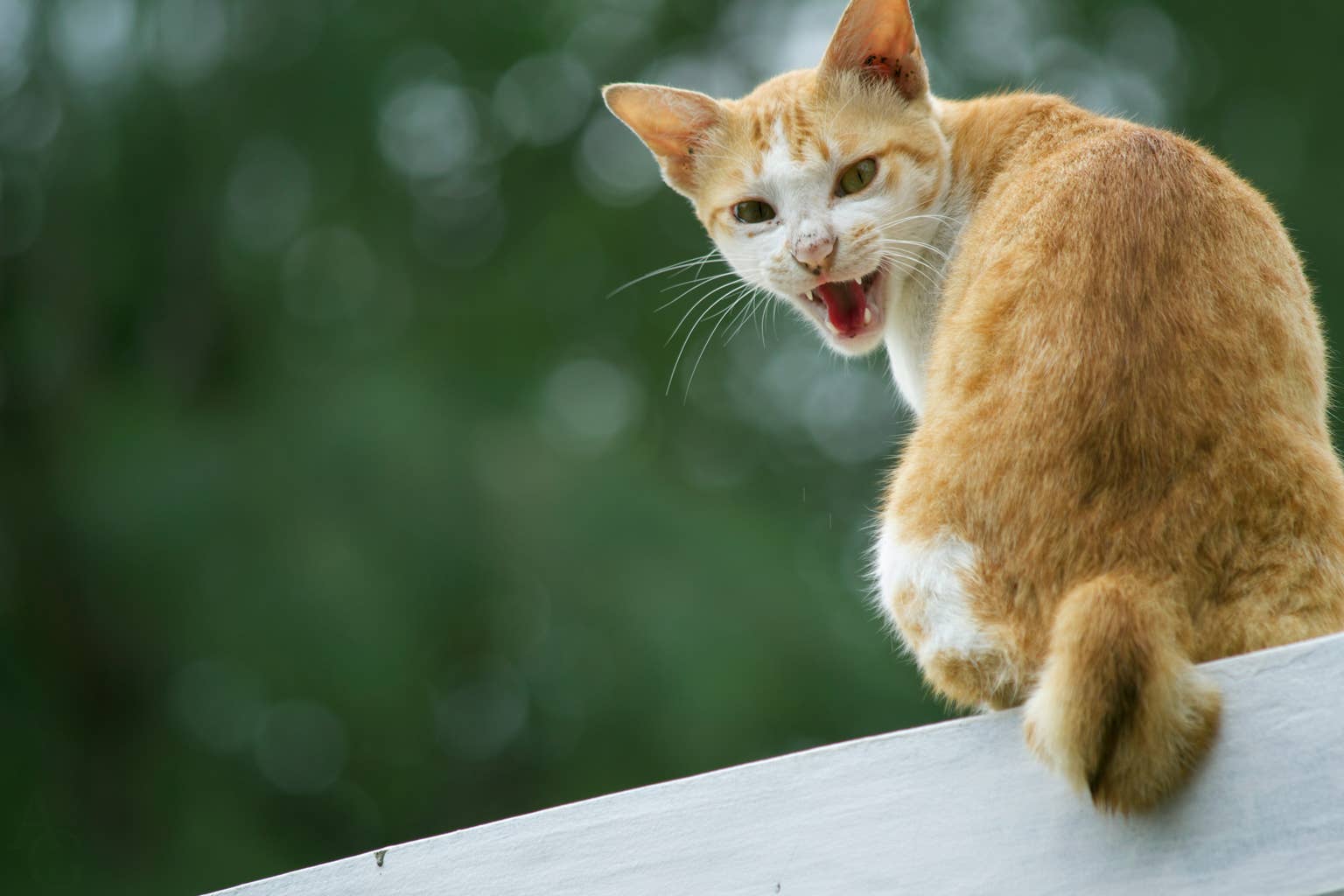
What Does a Stressed Cat Look Like? 5 Signs of Feline Stress
When cats undergo stress, they have this innate tendency to internalize it in a sneaky, often misunderstood way. Yup, cats are masters of disguise. This is due to a history of living in the wild as stealthy, solitary hunters, where showing signs of weakness equals vulnerability in a dog-eat-dog world.
Despite domestication and living in homes where cats are fed food from bags in shiny bowls, this instinct to hide pain and stress still remains unchanged.
It’s up to us to learn how to recognize the subtle signs of stress in cats to help improve their lives and their overall sense of well-being. Left untreated, there’s a chance that, as the stress builds up, it will bubble over into unwanted behaviors.
Following are several signs of stress in cats that are often missed.
1. Inappropriate Elimination
In a nutshell, we’re talking about cats urinating or defecating outside of the litter box. While this may seem like a case of a cat acting out of spite, in reality, what’s going on here is that the cat is communicating his discomfort.
By urinating on your laundry, bed or couch, your cat is messaging you in pee-mojis that something isn’t right and he’s feeling stressed.
Stress-provoking events can cause a cat to no longer tolerate a dirty litter box or reach a difficult-to-access location.
Environmental stressors may include the presence of new pets or people, household renovations or agonistic interactions with other cats or people sharing the home, explains board-certified veterinary behaviorist Dr. Megan Herron.
2. Excessive Grooming
If your cat keeps licking and licking, this can be his way of self-soothing. Essentially, this is your cat’s coping mechanism to help him destress when his life gets hectic.
When excessive, licking can lead to hair loss due to self-trauma. When this happens due to non-medical issues such as stress, frustration or conflict, it’s known as psychogenic alopecia.
In particular, this behavior is often noticed in cats who live in multi-cat households and have basic needs unmet, explains board-certified veterinary behaviorist Dr. Christine D. Calder.
3. Scratching Furniture
You may think your cat is acting naughty when he scratches your furniture, but actually, it may be a red flag for something wrecking his tranquil lifestyle and routines.
Indeed, scratching may be a sign of stress and anxiety, especially when it’s excessive or involves new areas and sites. It’s also worth paying attention to what exactly the cat is scratching.
Scratching in a particular room or a person’s possessions may signal a relationship problem that may need to be resolved, point out board-certified veterinary behaviorists Drs. Debra Horwitz and Gary Landsberg.
4. Changes in Sleeping Habits
A cat who’s stressed and hypervigilant may start sleeping less because she’s excessively concerned about noises or changes in the environment. This can happen, for example, when moving, especially if the move involves going from a larger house to a smaller one, considering the reduction in space to explore.
Excessive and repeated stress may also cause cats to go through the opposite problem. An overall decrease in activity and an increase in the amount of time spent sleeping can be a sign of a cat who’s feeling depressed, explains board-certified veterinary behaviorist Dr. Wailani Sung.
5. Changes in Appetite
You may think your cat has become picky and finicky, but in reality, he may be struggling with stress. Stress can cause cats to develop a decrease in appetite or pica, explains board-certified veterinary behaviorist Dr. Kersti Seksel.
While a stressed cat may only skip a meal, it’s important to pay attention to a cat who goes without eating for several days in a row. These cats may be at risk for a potentially fatal condition calledhepatic lipidosis.
This peculiar metabolic response is particularly common in cats who are overweight and shift to a reduction in food intake. What happens is that, following a period of not eating, the liver begins breaking down fat from the body, which may overwhelm the liver’s ability to process the fat, and therefore, the fat gets stored in the liver, explains Dr. David Williams.
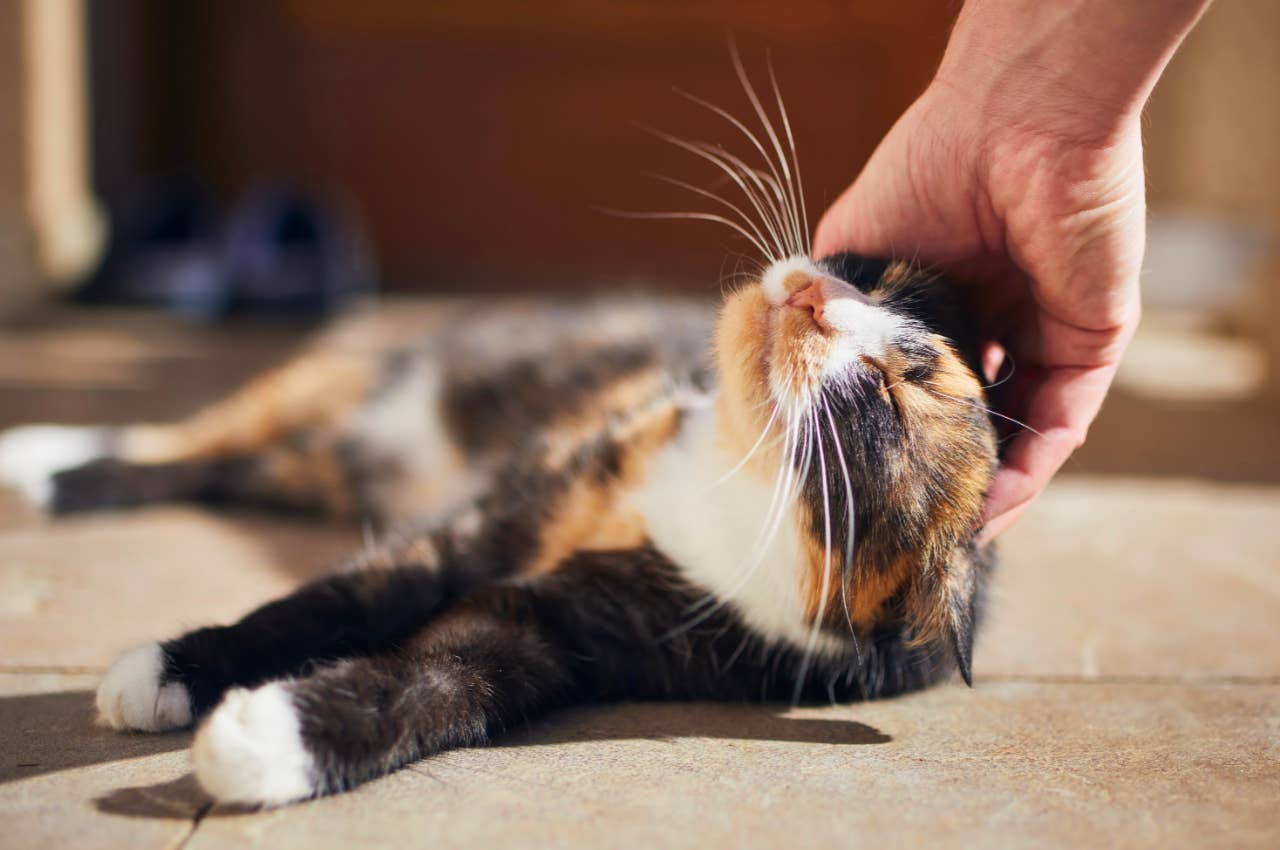
How to Help Your Cat De-Stress
Once you learn to recognize the signs and symptoms of stress in cats, it’s time for intervention. Even better, prevent stress from happening in the first place. Here are several general steps to help your cat de-stress and feel better in a world where even small changes can cause their lives to go topsy-turvy.
Keep Changes to a Minimum
OK, we can’t have our cats live in a bubble to protect them from changes, but we can take steps to soften the impact of those changes. For example, if you need to rearrange the furniture, you can do so gradually, ideally while offering treats and praise nearby.
Create “Safe Zones”
Safe zones are areas your cat can retreat to when feeling overwhelmed. They may consist of high perches, quiet rooms and hidey-holes, which can help cats regain that ideal emotional homeostasis.
Use Scent
While dogs are known for having the superior sense of smell, cats too live in a world of smells. Stressed cats may therefore benefit from Feliway (synthetic feline pheromones) to help ease transitions or any stressful events.
Engage in Play Therapy
Play is incompatible with stress, so involving the cat in games can help her blow off steam and express her normal predatory behavior. It may help to use food puzzles or hide her food around the house. This can help reduce stress and anxiety and redirect her energy.
Get Some Calming Aids
There are several calming aids that are available over the counter or by prescription. Calming supplements for cats may contain L-tryptophan, L-theanine, valerian root and chamomile.
Find a Professional
If the stress escalates or doesn’t improve despite your interventions, then it’s time to consult with a specialist, such as a DACVB (board-certified veterinary behaviorist).
The Bottom Line
Cats are stoic beings who are experts in pretending that everything is fine—until they poop on your bed or develop a urinary blockage from stress-induced cystitis. Just because they aren’t wailing into a pillow doesn’t mean they’re okay.
As sad as this is, the good news is that once we understand our cats’ quiet signals of stress and their emotional worlds, we can take steps to transform from oblivious housemates to empathetic caretakers and improve their lives.
Up Next:
Related: Why Is My Cat Meowing So Much? 10 Potential Reasons
References
- Meghan E. Herron, Advances in Understanding and Treatment of Feline Inappropriate Elimination, Topics in Companion Animal Medicine, Volume 25, Issue 4, 2010, Pages 195-202
- Westropp, Jodi & Kass, Philip & Buffington, Charles. (2006). Evaluation of the effects of stress in cats with idiopathic cystitis. American journal of veterinary research.