

The government’s industrial strategy is a small step forward for the country, but a much bigger one for Labour. Following the 2008 financial crisis, the party talked tough about replacing a failed economic model. But just a year later, its ministers produced a strategy that made clear real change was off the agenda. “The last thing the government wants to do,” they wrote in 2009, “is revive old theories or to invent a new ideology in managing the economy”.
Those days are gone. Labour has been carried on the tides of global transformation, and its 2025 strategy paper contains a welcome critique of market-led failure – particularly in the areas of regional inequality and energy dependence. What the document also reflects is a long-overdue embrace of a more hands-on state.
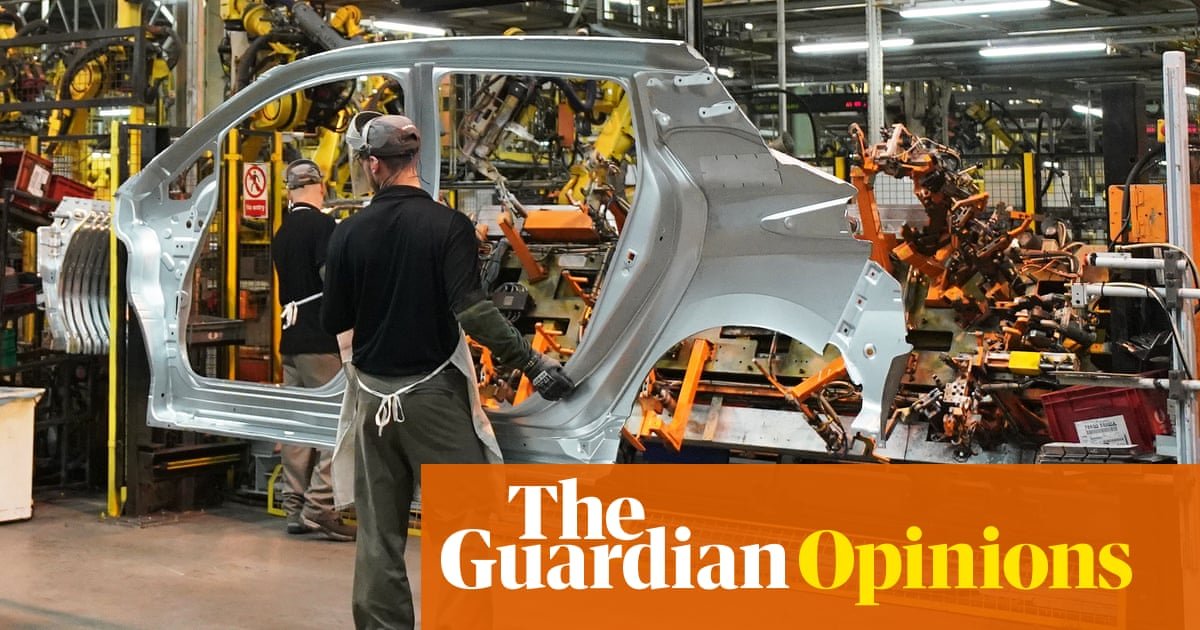
In advanced manufacturing, the strategy outlines a clear set of interventions that break with economic orthodoxy by re-establishing the government as investor of first resort, risk absorber and catalyst of structural transformation. There is also a substantial turn toward state-led industrial policy in clean energy, aimed at driving investment, shaping markets and coordinating national capabilities. Public investment in this area is slated to reach £30bn a year by 2035. Proposals such as a national wealth fund hint at a more interventionist role for the government, even if the rhetoric remains cautious. These are good ideas.
The strategy was sold as a lifeline for energy-heavy industries, with promises of lower electricity prices, but how Treasury relief narrows cost gaps with international competitors remains unclear. The trouble with the current strategy is that the emphasis on government action is barely telegraphed. What’s bold is barely said; it feels as if the state dares not speak its name.
This may be due to message fatigue. Industrial policy has repeatedly surfaced in Tory politics since 2011 – from George Osborne’s “the march of the makers”, to Theresa May’s “modern industrial strategy”, to Boris Johnson’s “levelling up” agenda. These efforts aimed to revive British manufacturing and implied a bigger role for government – but they fell flat, offering slogans not substance. The worry now is that, without the jobs, support for industrial renewal will dry up.
Most strikingly, the strategy echoes the state intervention of Joe Biden – but sidesteps the financial system that underpins Britain’s economic imbalance. In the government strategy, the City remains sacrosanct. But freeing markets won’t help if cash keeps flowing the wrong way. Since the 1980s, prioritising finance has overvalued sterling, gutted manufacturing and driven private debt as capital chases speculation over production. Industrial dynamism also arises from deep cultural and institutional shifts, not just policy tweaks. A real shift means confronting the culture of short-term profits and financial hoarding – not just funding “clean” factories. Labour’s strategy does not go there.
As a high-income, post-industrial economy, the UK cannot and perhaps should not aim to recreate 20th-century mass manufacturing, which is now dominated by lower-wage economies or heavily subsidised big strategic ones. Instead, the government’s strategy is right to target advanced, high value-added niches such as life sciences or critical segments of the green technology supply chain. Britain won’t succeed without recovering lost economic sovereignty. Labour hints at transformation, but a refusal to confront financial dominance only cements the status quo.
-
Do you have an opinion on the issues raised in this article? If you would like to submit a response of up to 300 words by email to be considered for publication in our letters section, please click here.