

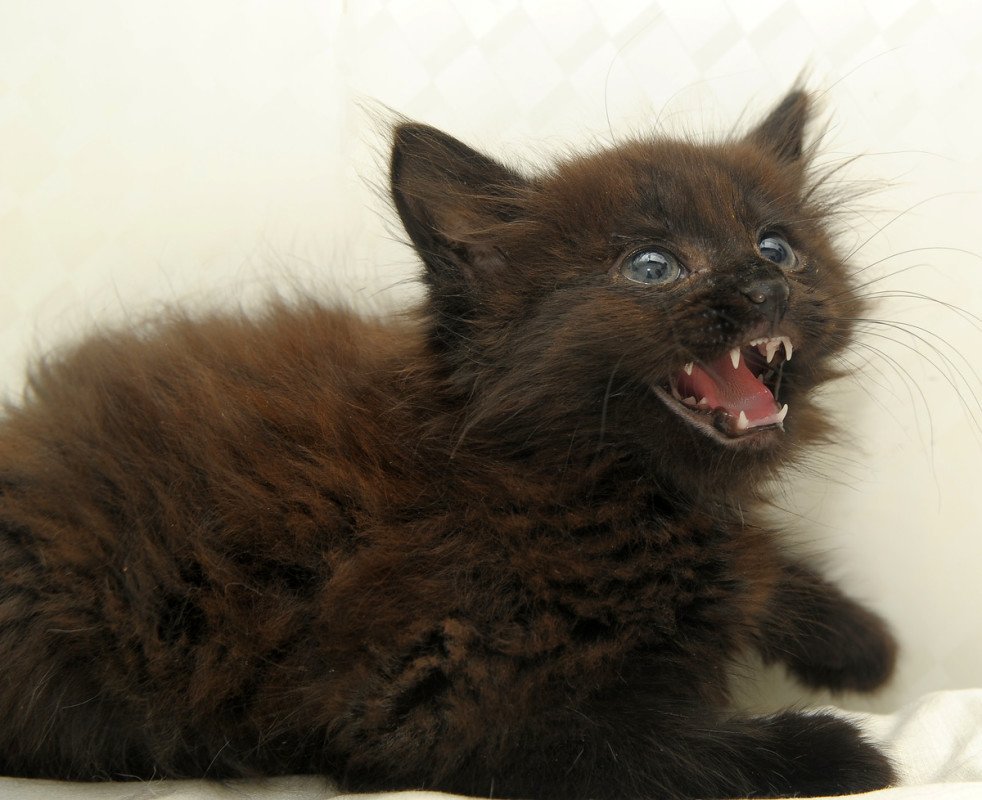
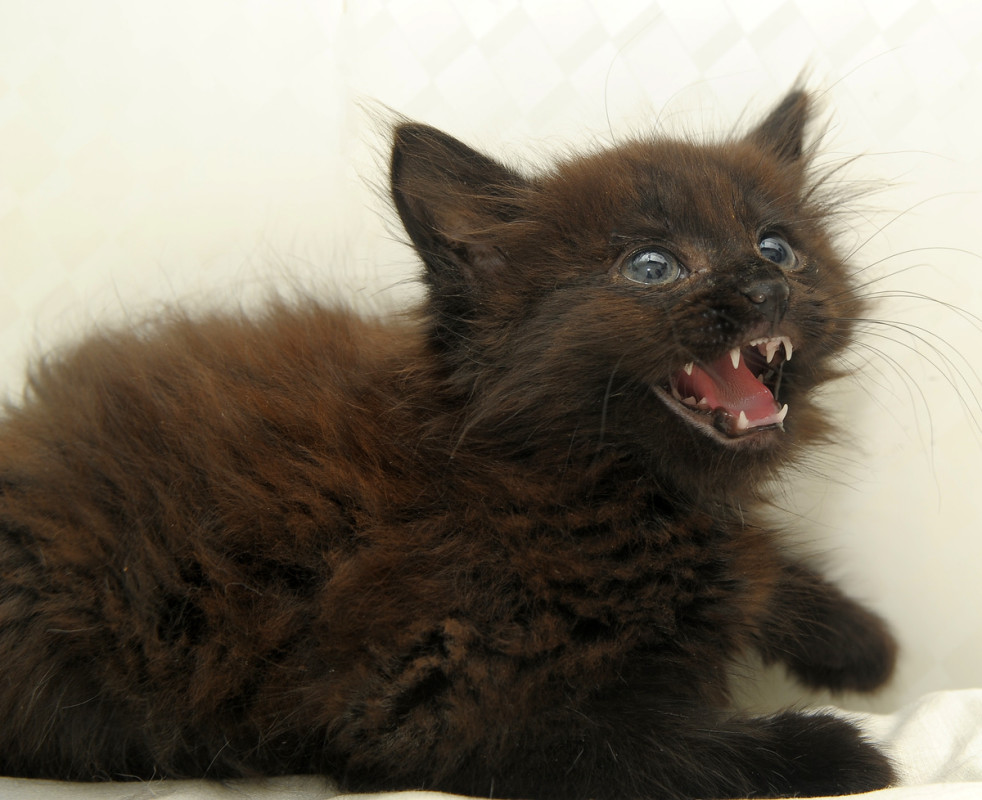
Kittens are known for being rambunctious and feisty, and this tiny black kitten named Luna is no exception. Her human mom, Bonnie, describes her as ‘cute but not innocent,’ and you’ll understand why after watching this video she shared on TikTok at the end of June.
The video starts with Luna ‘whispering,’ and asking her mom to let her up so she can be with her. When mom picks her up and puts her down on her lap, she asks the kitten not to attack her. Watch on to see what happens next!
@yeahthatbonnie She’s cute but not innocent 😳 #DwarfCat #TinyVoid #luna #cats #kitten #catsoftiktok #cute #blackcats #fyp #funny
Attack mode activated! This was just too cute! Luna’s adorable little face looked so innocent, but as Bonnie mentioned, she’s not! Her plan was to attack all along, and it worked!
Commenters had some pretty funny things to say about Luna’s attack. @its.me.70 shared, “Luna said I want to attack you, but I need help. Ha ha!” @mumsley waller agreed, “She’s just a baby and needs assistance with her evil plan.” @CoraNoir laughed and said, “Not you setting up your own attack!!!” @Scribonum pointed out, “Fell for the cheapest trick in the book LOL!”
Related: ‘Fierce’ Maine Koon Kittens ‘In the Making’ Are Too Cute for Words
When Cats Attack
Oftentimes, when cats want to play, they will ‘attack’ instead. Why do they do this? Cats attack when playing because it’s part of their natural predatory instincts. Play-related aggression can be caused by under-stimulation, an excess of unused energy, and lack of appropriate opportunities for play, according to VCA Animal Hospitals.
Kittens and young cats enjoy engaging in rough, active play because all feline play consists of mock aggression. “Cats stalk, chase, sneak, pounce, swat, kick, scratch, ambush, attack and bite each other—all in good fun.“
When does play aggression become real aggression? VCA shared some of the signs, “Often it is possible to see a change in your kitten’s behavior that will signal to you that the play session is getting out of control. The first sign may be intense movement of the tail from side to side. The ears may go back and the pupils, the dark part of the eye, may become larger. If you observe any of these signs, it is best to end the play session before the kitten becomes too agitated.”
If your cat becomes aggressive, stop the play session and ignore the behavior. If necessary, VCA recommends using a noise deterrent (like hissing at the kitten) or even a spray water bottle to stop the behavior.